

Every piece of waste we generate has a destination and a lifespan in the environment. Understanding how long each type of waste takes to decompose is essential for making more sustainable choices and reducing our ecological impact.
How long does our waste take to decompose?
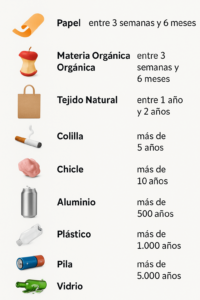
Decomposition times vary significantly depending on the material:
-
Organic waste: such as fruit peels or food scraps, decomposes in approximately 2 to 6 months, depending on environmental conditions.
-
Paper: between 2 and 12 months, although in dry environments it can take up to a year.
-
Cigarette butts: 1 to 2 years, releasing toxic substances during degradation.
-
Plastics: plastic bags can take up to 150 years, while PET or PVC bottles require between 100 and 1,000 years to decompose.
-
Glass: virtually indestructible, it can remain in the environment for more than one million years.
-
Batteries: up to 1,000 years, releasing heavy metals and dangerous pollutants.
-
Surgical masks: widely used during the pandemic, they can take up to 400 years to decompose, turning into microplastics harmful to wildlife and ecosystems.
Environmental impact of waste decomposition
Waste decomposition does not only involve the physical disappearance of the object, but also the release of substances that can be harmful:
-
Greenhouse gases: the decomposition of organic waste in landfills generates methane, a gas with a global warming potential 25 times greater than carbon dioxide.
-
Leachates: toxic liquids resulting from decomposition that can contaminate soil and groundwater if not properly managed.
-
Air pollution: waste burning or decomposition under anaerobic conditions can release toxic compounds such as dioxins and furans, affecting air quality and human health.
What can we do?
-
Reduce: choose products with less packaging and avoid single-use items.
-
Reuse: give objects a second life before throwing them away.
-
Recycle: separate waste correctly to facilitate recycling.
-
Compost: turn organic waste into natural fertilizer.
-
Educate: share information about the impact of waste and promote sustainable practices in your community.
Every action counts. By being aware of how long our waste remains in the environment and its impact, we can make more responsible choices and contribute to a healthier planet.


Comments (0)
There are no comments for this article. Be the first one to leave a message!